Yes, I want to
How can I help?

Yes, I want to
How can I help?

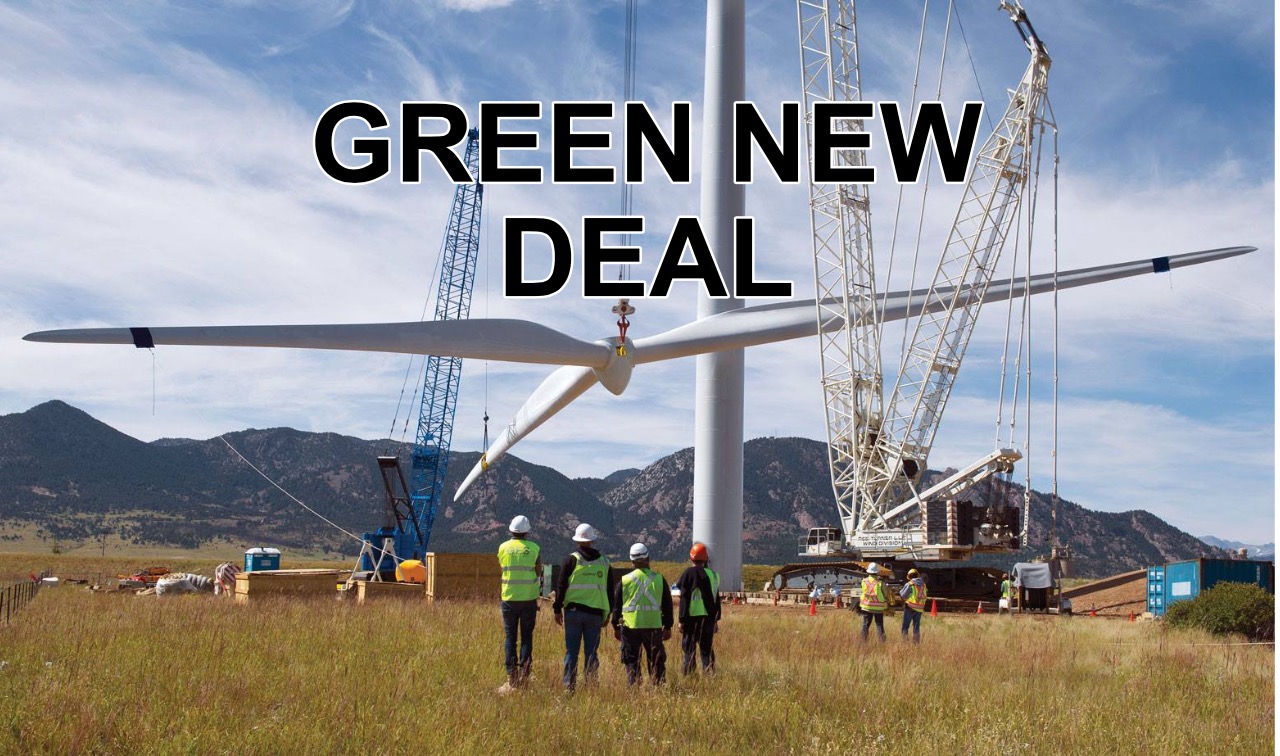
A Green New Deal, or "Green Industrial Revolution" is a major government initiative to create jobs and invest in technologies that can address the climate crisis and inequality at the same time.
In order to keep global warming to no more than 1.5°C above pre-industrial levels, we need to achieve a 45% cut in global carbon emissions (from 2010 levels) by 2030, reaching a target of net-zero carbon emissions by 2050.
There are many possible pathways to reaching the IPCC target of net-zero carbon emissions by 2050. But there is really only one way to cut emissions to the extent required by 2030, and that is by moving swiftly to electric vehicles (EVs), to electric heating, and to clean wind and solar powered electricity.
Other steps are required to reach net-zero emissions over the next 30 years. But unless we take these hugely important steps (and make some initial headway on the others) during the next 10 years, we will have missed our one chance to avert climate catastrophe.
A “Green New Deal” (or GND) would move the UK and the rest of the world off of their dependency on fossil fuels and onto a new path in just 10 years. This simply cannot happen through “market forces” or personal lifestyle choices. More energy conservation measures and reductions in the massive amounts of energy we waste as a society are still needed, but to address the scale of the requirement, serious government intervention is required.
Recent Conservative governments have taken steps to cut emissions and reduce demand, but much more investment, stronger legislation and a real commitment from all sectors of society is needed to achieve the goal. The next government will need to address all this on a scale not seen since the 1945 post-war Labour government that brought in the National Health Service, National Insurance, Council Housing, nationalised industries and state schools.
A GND needs to begin right now, and it needs to address the other two life-threatening global emergencies if it is to achieve the targets needed to address the climate crisis.
Failing to address inequality risks failing on climate because the measures needed to cut carbon require more than government intervention. These measures require the buy-in and participation of a very large number of people.
If the net result of government measures to address the climate crisis is that large numbers of people end up in the same economic condition as they are now, or even worse off, they are unlikely to accept it. And without cooperation from citizens, it is hard to see how these measures can succeed.
Failing to address the nuclear nightmare also risks failing on climate. The money, skills and infrastructure currently wasted on nuclear weapons are urgently needed for addressing the climate crisis. And we need the international cooperation and goodwill that is currently being squandered by the way we treat the rest of the world.